



Readi AI
I Tried Readi.AI So You Don’t Have to Fake-Read Your Next Book Report
Okay, real talk. Last semester I had exactly two days to finish “The Great Gatsby” for a lit class discussion, and I hadn’t opened the book past chapter three. Classic. I’d been there before with SparkNotes tabs open in fifteen browser windows, half-reading summaries that still didn’t help me actually talk intelligently in class.
A classmate mentioned she’d been using something called Readi.AI on her phone to catch up on assigned reading. I was skeptical — I’ve tried a bunch of “AI study” apps that turn out to be glorified flashcard generators with a fancy name slapped on. But I downloaded it anyway because, well, desperation.
Here’s everything I noticed after actually using it for a few weeks across two classes.
So What Is Readi.AI, Actually?
It’s a mobile app built for students who need to get through assigned reading fast, without just skimming a Wikipedia plot summary and hoping nobody calls on them.
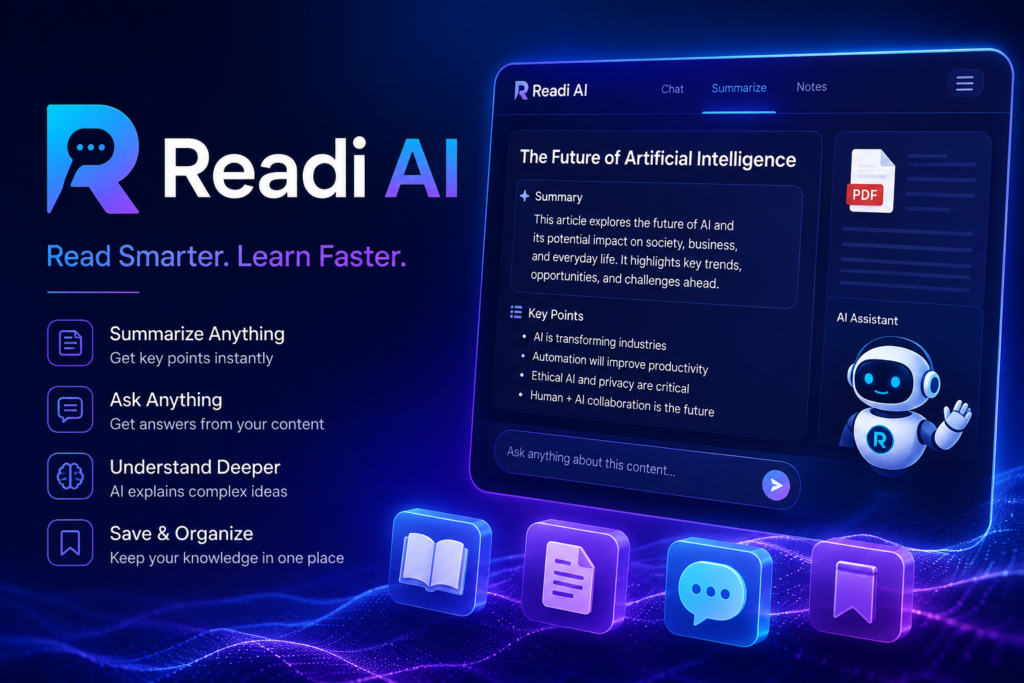
Instead of a wall of text, it breaks books down into chapter-by-chapter study guides — summaries, character breakdowns, themes, symbols, key quotes with context. Basically the stuff your teacher actually wants you to notice, organized so you’re not hunting for it.
The part that caught me off guard was the character chat feature. You can literally open a conversation with a character from the book and ask them questions. I asked Gatsby why he kept hosting those absurd parties, and got a response that actually referenced the green light and his whole obsession with Daisy. It’s not real “him,” obviously — it’s AI role-playing based on the book’s content — but it made the themes click in a way rereading passages hadn’t.
How I Actually Used It (Step by Step)
If you’re going to try this, here’s roughly the order that worked for me:
1. Search for your book first, before panicking. Not every book is in there. I got lucky with Gatsby and “1984,” but a smaller assigned reading for a specific class (a niche short story collection) wasn’t available. Always check before you build your whole plan around it.
2. Read the chapter summary before the actual chapter, not after. This felt backwards at first, but it worked way better. Knowing roughly what’s coming made the actual reading faster because I wasn’t confused about who half the characters were.
3. Use the character analysis section after finishing the chapter. This is where it actually helped me sound smarter in class discussions. It’s not just “he is the protagonist” — it gets into motivations and relationships, which is exactly the kind of thing teachers ask about on essay questions.
4. Chat with a character when something doesn’t make sense. Instead of googling “why did X do Y in book,” I just asked the character directly. Weirdly more useful than search results half the time, because it stays grounded in the book instead of pulling random internet opinions.
5. Save the themes and symbols breakdown for essay prep. This is the part I wish I’d used earlier. When my essay was due, I already had a list of themes and symbols with context instead of scrambling to find quotes at 11pm.
Where It Actually Helped (Real Examples)
For “1984,” I was genuinely struggling to keep track of the different factions and Party structure. The chapter summaries laid it out clean enough that I stopped rereading the same page four times.
For an essay on symbolism in Gatsby, I used the key quotes section to find the actual line about the green light instead of trying to remember where it was in the book. Saved me a solid twenty minutes of flipping pages.
I also used it before a class discussion I hadn’t prepped for at all. Read the summary and themes section on the bus, and somehow still had something decent to say when called on.
Mistakes I Made (Learn From These)
I tried to use it as a total replacement for reading. Big mistake for anything with an essay attached. The summaries are good, but they’re not going to help you analyze a specific passage your teacher assigns for close reading. I got caught out on a quiz that asked about a very specific paragraph — the kind of detail a summary just won’t have.
I didn’t double check the quote citations. I copy-pasted a quote into an essay draft without verifying the page number matched my actual physical copy. Different editions can have different pagination, so always cross check before submitting anything with citations.
I assumed every book would be covered. It’s clearly built around commonly assigned literature — classics, popular high school and college reading list stuff. If your professor assigned something obscure or very recent, don’t count on it being there.
I relied on the character chat for factual plot points instead of interpretation. It’s genuinely great for exploring “why” and “what did this mean,” less reliable if you need a hard factual detail confirmed. For plot facts, I’d still double-check against the actual text.
Who This Is Actually Good For
Honestly, it’s not for people who want to skip reading entirely and still ace a close-reading exam — that’s not realistic with any tool. But it’s genuinely useful if you:
- Read the book once and need a refresher before a discussion or exam
- Are behind on assigned reading and need to catch up without losing the plot
- Struggle to identify themes and symbols on your own
- Learn better through conversation than passive reading (the character chat genuinely helps with this)
- Need to plan an essay and want organized quotes instead of hunting through the whole book again
If you’re someone who processes reading better out loud or through dialogue rather than staring at pages, the interactive character conversations are honestly the standout feature. It made me actually think about motivation and perspective instead of just memorizing “what happened.”
A Few Practical Tips
Don’t skip the actual reading if there’s a test on specific passages — use this alongside the book, not instead of it, especially for anything requiring textual evidence.
Screenshot or copy quotes you like into your notes app as you go. Don’t wait until essay night to go digging through the app again.
If a book isn’t available, that’s not necessarily a dead end — check if a similar or earlier edition might be listed under a slightly different title.
Use the study guide before class discussions specifically, not just before tests. It’s honestly more useful for keeping up with weekly discussion questions than last-minute cramming.
Final Thought
I’m not going to pretend this replaces actually reading a book — nothing really does, and any tool claiming that is overselling it. But as something to lean on when you’re behind, confused about character relationships, or trying to organize your thoughts for an essay, it’s genuinely one of the more useful study apps I’ve tried that isn’t just repackaged Wikipedia. Worth trying if your reading list has some classics that are actually assigned reading, not niche self-published stuff nobody’s heard of.








Leave a Reply