


Dentalx AI Dentistry Company
Wait, what even is DentalX (or tools like it)?
Before you picture some robot holding a drill, let me stop you right there. That’s not what this is.
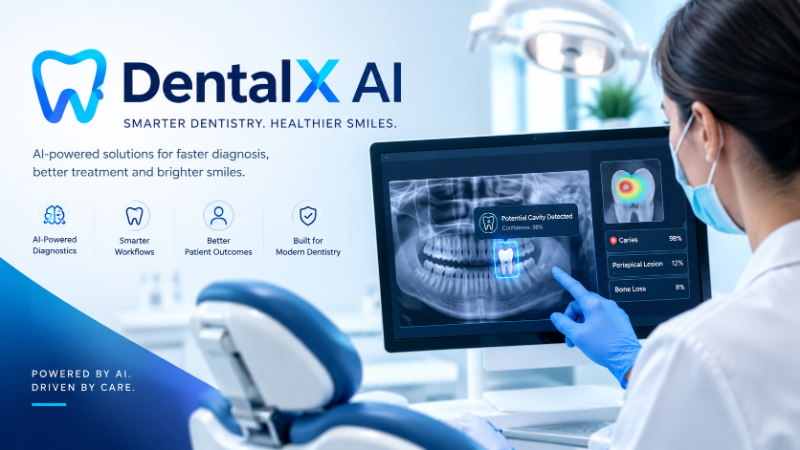
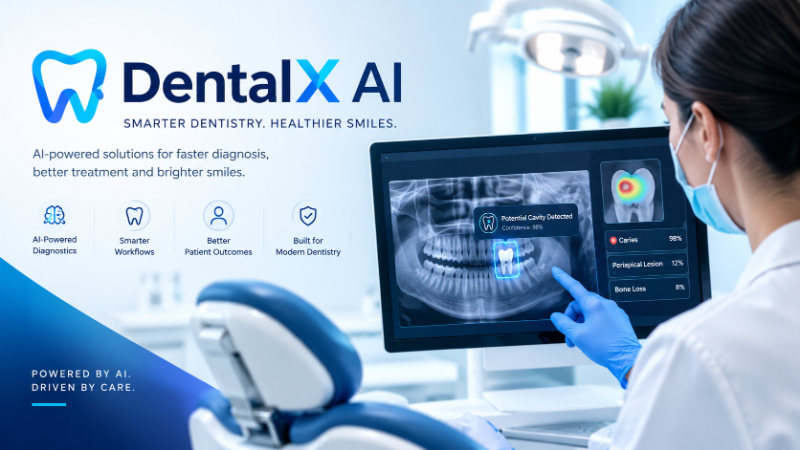
DentalX-style platforms are AI systems built to look at dental X-rays and scans and flag things — cavities, bone loss, old fillings, cracks, that kind of thing — faster than a human eye might catch on a busy Tuesday afternoon. The dentist still makes the call. The AI is more like a really attentive assistant standing over their shoulder saying “hey, check this spot out.”
Think of it less like “robot dentist” and more like spell-check for X-rays. It doesn’t write the essay for you, it just flags stuff you might’ve missed.
My actual experience sitting in the chair
Step 1: The X-ray happened exactly like always.
Nothing different here. Same machine, same lead apron, same slightly awkward bite-down-on-this moment.
Step 2: The image popped up on screen almost instantly.
This is where it got interesting. Instead of just a plain black-and-white X-ray, there were these overlay markings — little colored outlines around a couple of teeth.
Step 3: My dentist walked me through it.
She pointed at one flagged spot and said, “this is early, we caught it before it became a real problem.” Another flagged area turned out to be nothing — just an old filling the AI mis-tagged. She corrected it right there on screen.
That second part is honestly the most important thing I learned: the AI gets things wrong sometimes, and that’s expected. It’s not magic. It’s a tool that narrows down what to look at, not a replacement for someone who actually went to dental school.
The mistake I made (and you probably will too)
Okay, confession time. After that first appointment, I went home and Googled my “flagged” tooth like it was a diagnosis instead of a heads-up. Big mistake. I spiraled a little, assuming I needed some huge procedure.
Turns out, it was a “watch and monitor” situation, not an emergency. Lesson learned: when your dentist’s software flags something, ask “what does this actually mean for me right now” instead of spiraling into WebMD mode. The AI flags patterns — your actual dentist gives you the context.
Why dental offices are even bothering with this stuff
I asked my dentist directly why she started using it, and her answer was pretty simple: speed and consistency.
She sees a lot of patients back to back. Human eyes get tired. A tool that consistently scans every image the same way, every time, catches things that fatigue might cause someone to miss late in the day. It’s not that she doesn’t trust her own training — it’s more like a second pair of eyes that never gets tired or distracted.
There’s also the patient communication side, which honestly surprised me. Instead of just hearing “you have a cavity,” I got to see it, color-coded, on a screen. That visual made me way more likely to actually understand (and agree to) the treatment plan instead of just nodding along confused.
How to actually make the most of this if your dentist uses it
If you walk into an appointment and your office has adopted something like this, here’s what I’d suggest doing:
- Ask to see the screen. Don’t just take their word for it — most offices are happy to show you the actual scan and the flagged areas.
- Ask what the confidence level or flag actually means. Some flags are “definitely worth fixing,” others are “worth monitoring.” Big difference.
- Ask if the AI finding changed anything about the treatment plan. Sometimes it doesn’t — it’s just extra confirmation.
- Don’t skip the human explanation. If your dentist glances at the screen and rushes through without explaining it, ask questions. You deserve the “why,” not just the visual.
- Keep your own copies/records if offered. Some practices will email you the annotated image. It’s genuinely useful to have if you switch dentists later.
Real examples I’ve seen (and heard about from others)
A coworker of mine had a similar experience — her dentist caught early bone loss around a molar that she said “didn’t hurt at all, so I never would’ve thought to bring it up.”
On the flip side, a friend told me her dentist’s system flagged something that turned out to be nothing after a closer look — just a shadow from the X-ray angle. Her dentist didn’t panic or push unnecessary treatment; she just double-checked and moved on. That’s honestly reassuring — it shows the tool isn’t being used to upsell people into procedures they don’t need, at least not in the offices I’ve encountered.
Mistakes to avoid if you’re skeptical (or excited) about this tech
- Don’t assume “AI-flagged” means “definitely true.” It’s a suggestion, not a verdict.
- Don’t assume every dental office has this yet. A lot of practices, especially smaller ones, are still using traditional review methods, and that’s completely fine too.
- Don’t let flashy tech distract you from basic questions — cost, insurance coverage, and whether a recommended treatment is urgent or optional still matter more than whether AI was involved.
- Don’t skip asking about your dentist’s actual clinical judgment. If something feels off or rushed, get a second opinion regardless of what software was used.
So, is it actually worth caring about?
Honestly? Yeah, a little. Not because it’s flashy or futuristic, but because it made my appointment feel more collaborative
It’s not going to replace the value of a dentist who actually knows your mouth, your history, and your habits. But as an extra set of digital eyes catching small stuff early? I’m into it. Just don’t let the cool tech distract you from asking good, old-fashioned questions in the chair.
If your dentist’s office has this kind of tool now, don’t be shy about asking to see what it’s showing them. It genuinely changes how much you understand about your own dental health — and honestly, that’s the whole point.





Leave a Reply