


Aclicks AI Seo
AIclicks AI SEO: A Practical Guide to Finding Out If AI Tools Actually Recommend Your Brand
Here’s a test you can run in two minutes. Not your brand name, but something like “best invoicing tool for freelancers” or “affordable CRM for a small agency.”Now read the answer. Is your brand in it?
For a lot of site owners, the answer is a quiet no. You rank on page one of Google, your content is solid, and the AI answer lists three competitors and never mentions you. That’s an uncomfortable feeling, and it’s the exact problem tools like AIclicks were built for.
This guide covers what AIclicks does, how I’d set it up, which mistakes to avoid, and who probably shouldn’t bother.
So what is AIclicks, really?
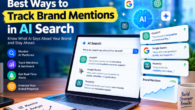
AIclicks is an AI search visibility tool. It tracks and optimizes brand presence across major LLMs like ChatGPT, Perplexity, Gemini, and Claude. Think of it as rank tracking, except instead of watching where you sit on Google, it watches whether AI assistants mention you in their answers.
You’ll see this niche called GEO (Generative Engine Optimization) or AEO (Answer Engine Optimization). Same idea, different acronym.
Based on its public listings, the workflow has four parts: it identifies what prompts potential buyers use, runs a visibility audit that reveals keyword gaps compared with competitors, builds an action plan, and offers AI agents to help write and post content.
It’s also a young company. AIclicks was founded in 2024 in Vilnius, Lithuania, and monitors visibility across more than 10 AI platforms. That matters because this whole category is new, and features change fast.
Why this isn’t just “SEO with a new label”
Classic SEO is fairly predictable. You target a keyword, build a page, earn links, and watch your position.
AI answers don’t work that way. There’s no stable “position 3.” Ask the same question twice and you can get slightly different brands. Answers also change depending on the model, the wording, and what sources the model trusts.
So the useful questions are different:
- How often does my brand show up for the prompts that matter?
- Which competitors keep appearing instead of me?
- Which websites are the AI pulling its answers from?
- Is the AI describing my product correctly?
That last one surprises people. Getting mentioned is only half the battle. Getting described wrongly, with the wrong pricing or the wrong features, can hurt just as much.
Setting it up step by step
This is the process I’d follow, and it’s what I’d recommend to anyone starting out.
Step 1: Write your prompt list before touching the tool.
Open a notes app and write 15 to 25 questions your customers would really ask an AI. Mix three types:
Don’t make every prompt contain your brand name. If you do, you’re only measuring people who already know you.
Step 2: Create your account and add your site.
AIclicks runs a freemium model with a trial, so you can test it without committing. Add your domain, your competitors, and your prompt list.
Step 3: Run the first audit and don’t panic.
Your first visibility report will probably look bad. That’s normal. Treat it as a baseline, not a verdict.
Step 4: Look at sources before content.
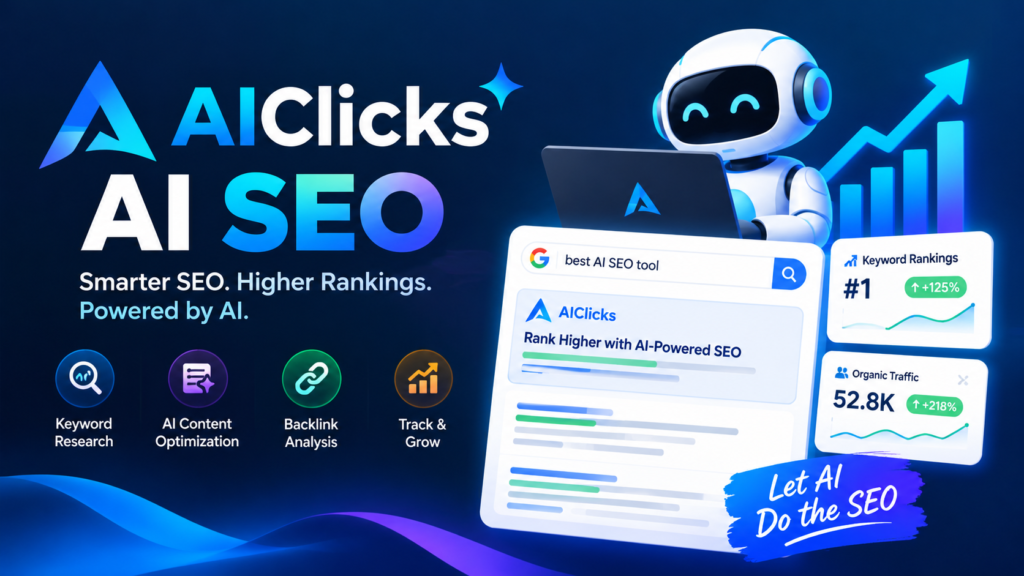
This is the most useful part. Check which websites the AI models cite when answering your prompts. Reviews, “best of” lists, Reddit threads, and industry blogs often show up more than brand websites do. If a competitor keeps appearing, look at where they’re being mentioned.
Step 5: Pick two or three fixes, not twenty.
Maybe it’s updating a comparison page, adding a clear FAQ, or getting your product listed on a review site that AI keeps citing. Do a few things properly and give them time.
Step 6: Connect traffic data if you can.
One G2 reviewer mentioned an AI traffic dashboard that connects directly into GA4. Visibility numbers are nice, but traffic and signups tell you whether any of it matters.
Step 7: Re-check on a schedule.
Weekly is plenty. Daily checking just makes you anxious about normal fluctuation.
[Add your own screenshot of the first audit here, and note what surprised you.]
What reviewers say
I always read the complaints first, because they tell you more than the praise.
Users on G2 like the prompt tracking and the clarity of the data. One reviewer called it affordable and a must-have for anyone serious about SEO today. Another said it finally shows where their content actually appears in AI answers.
On the downside, one reviewer noted the tool still needs development as the industry is still evolving. That’s fair, and it applies to almost every tool in this space.
A French review site also flags two limits: little focus on classic SEO such as technical work, backlinks, and on-page, and a higher entry cost than more general SEO tools. So AIclicks isn’t a replacement for Ahrefs, Semrush, or Google Search Console. It sits alongside them.
Real scenarios where this helps
A small SaaS company. You’re competing with bigger brands. AI assistants keep recommending the big names for your category. Tracking prompts shows you which comparison articles and directories feed those answers, so you know where to pursue mentions.
An agency. Several reviewers describe it as a good fit for agencies.
An e-commerce store. You can check whether AI shopping-style answers include your products, and whether your category pages answer the questions people ask.
Mistakes to avoid
Judging results after one check. AI answers vary. One snapshot proves nothing. Look at trends over weeks.
Tracking only branded prompts. Of course the AI knows you when someone types your name. The real opportunity is in unbranded questions.
Letting AI agents publish unreviewed content. Tools in this category can generate and post content for you. Thin, generic content hurts you with Google and with readers. Edit everything, add real examples, and fact-check.
Ignoring your own basics. If your site has unclear pages, no pricing information, or outdated details, no tool will fix that. AI models reward clear, factual, well-structured pages.
Chasing the tool’s score. A visibility score is a measurement, not a goal. The goal is customers finding you.
Who should skip it
Skip it if you’re a brand-new blogger with a handful of posts. Spend that effort on content and basic SEO first. It’s also not ideal if you want one tool for all your SEO. This one is specialized.
If budget is tight, look at alternatives. Public comparisons mention Otterly AI as a more budget-friendly entry point and Mangools’ AI Search Watcher as another affordable option.
My approach, if I were starting today
I’d run the free trial with 15 prompts and one competitor set. I’d ignore the score for the first two weeks and focus only on the sources list. Then I’d fix one page, request one legitimate mention on a site the AIs already trust, and wait a month before judging anything.
[Add your own result here: what changed after 30 days, even if the answer is “not much.”]
Final thoughts
AI search is still new, and nobody has a perfect playbook. AIclicks isn’t magic, but it does take the guesswork out of one question that matters more every month: when someone asks an AI for a recommendation, do you show up, and if not, why?
Start small, track consistently, and keep building content that real people find useful. That part hasn’t changed.





Leave a Reply