


AI Recruitment Software Goperfect
I Tried GoPerfect for Hiring So You Don’t Have to Guess If It’s Worth It
Not exaggerating. We had one open role — a mid-level marketing coordinator position — and somehow 340 applications landed in the inbox within ten days. I run a small agency, so “we” basically means me, a part-time ops person, and a shared Gmail folder that was slowly becoming my personal nightmare.
I did what most small teams do. I skimmed. I read the first paragraph of maybe 60 resumes, felt guilty about the other 280, and picked five people to interview based on gut feeling and whoever had a decent LinkedIn photo. That’s not hiring. AI Recruitment Software Goperfect
A friend who runs recruiting for a much bigger company mentioned she’d switched her team over to an AI recruiting tool called GoPerfect. I was skeptical — I’d already poked around a couple of “AI hiring” tools before and most of them were glorified keyword filters that rejected great candidates because their resume said “wrote” instead of “authored.” But I was desperate enough to try it on our next opening.
Here’s what actually happened, warts and all.
What GoPerfect Actually Does (In Plain English)
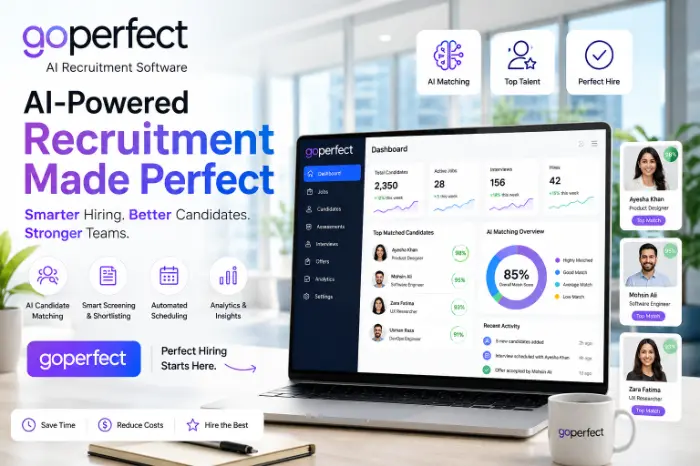
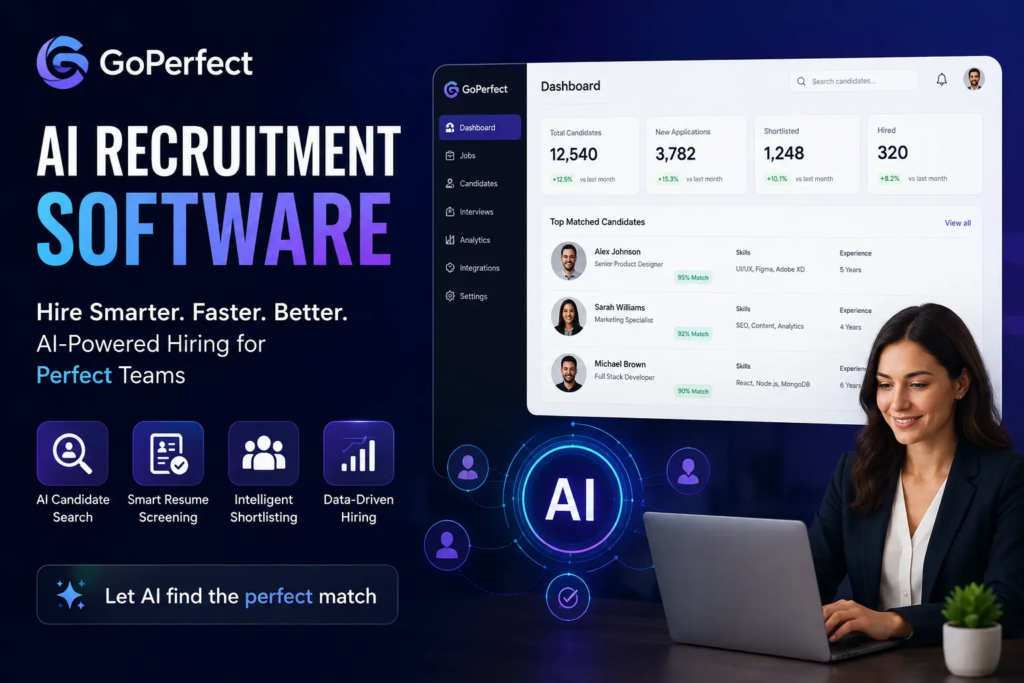
Skip the marketing language for a second. What GoPerfect does, practically, is this: you post a job, and instead of candidates just piling up in a folder, the platform reads every resume, pulls out the actual skills and experience, and ranks people based on how well they match what you’re looking for — not just whether they used the right buzzwords.
It also handles the boring parts nobody enjoys:
- Screening and shortlisting resumes automatically
- Sending outreach messages to promising candidates
- Coordinating interview scheduling so you’re not stuck playing calendar tag
- Syncing with applicant tracking systems you might already use, like Greenhouse or Lever
Basically, it’s trying to be the recruiter you wish you had time to be, minus the coffee breaks.
Setting It Up: Easier Than I Expected, With One Catch
I’ll be honest, I braced myself for a painful onboarding process. Most B2B software makes you sit through a demo call, fill out a form, wait for a “specialist” to reach out, then finally get access a week later.
That’s not what happened here. I created an account, opened a job post, and within about twenty minutes I was already looking at ranked candidate matches from our existing applicant pile. That part genuinely surprised me.
The catch — and this matters — is that the quality of your results depends heavily on how well you write the job description. I made the classic mistake the first time around: I copy-pasted our old, generic job posting that basically said “looking for a marketing coordinator, 2+ years experience, team player.” The matches came back fine, not great. Too broad.
The second time, I rewrote the posting to be specific about actual tasks (managing email campaigns in Klaviyo, running paid social on Meta Ads Manager, basic copywriting) instead of vague qualities. The candidate matches improved noticeably. Lesson learned: the AI is only as sharp as the input you give it.
Step-by-Step: How I Actually Used It
If you’re thinking about trying this for your own hiring, here’s roughly how the process went for me, step by step.
1. Write a specific job description. Don’t just list soft skills. List actual tools, actual daily tasks, actual deal-breakers. This is the single biggest lever for better matches.
2. Post the job inside the platform. It pulls in applications and also actively sources candidates who fit, not just people who happened to apply. AI Recruitment Software Goperfect
3. Let it screen and rank. Instead of reading 340 resumes myself, I got a shortlist ranked by relevance, with the reasoning behind each match visible so I could sanity-check it.
4. Review the shortlist manually anyway. I want to be clear about this — I did not blindly trust the ranking. I still read through the top 25 or so myself before deciding who to contact. More on why below.
5. Use the outreach automation, but personalize it. It can send templated messages to candidates, which is a huge time-saver for initial contact, but I edited the templates so they didn’t sound like a robot wrote them (because, well, one did).
6. Let it handle scheduling. This is where it earned its keep the most, honestly. Chasing five candidates for interview times used to eat up an entire afternoon. The scheduling automation cut that down to almost nothing.
Where It Genuinely Helped
The biggest win, by far, was time. What used to take me two full days of resume reading took closer to two hours of actual decision-making. That’s not a small difference when you’re running a small team and hiring isn’t your only job.
The semantic matching was also better than I expected. It picked up on candidates whose resumes used different wording than the job post but who clearly had equivalent experience — something a basic keyword filter would’ve completely missed. One of our best hires this year had a resume that never once said “email marketing,” but her actual work history was full of it under different phrasing. The old me would’ve skipped straight past her.
Where I’d Push Back a Little
I’m not going to pretend it’s flawless, because it isn’t, and I don’t trust reviews that claim a tool is perfect.
First, no AI tool should be the final decision-maker, and GoPerfect doesn’t pretend to be one either — it surfaces candidates, it doesn’t hire them for you. I still caught a couple of ranking calls I disagreed with, usually because the AI weighted years of experience a bit more heavily than I would have for a role where raw skill mattered more.
Second, if your job description is lazy, your results will be too. I said this already, but it’s worth repeating because it’s the mistake I see people make with basically every AI hiring tool, not just this one.
Third, pricing is something to actually budget for rather than assume. Plans generally run on a per-position basis, and costs can add up if you’re hiring for multiple roles at once, so it’s worth comparing that against what you’re currently spending on job board postings or agency fees before committing. AI Recruitment Software Goperfect
Common Mistakes I’d Tell a Friend to Avoid
- Don’t skip writing a real job description. Vague input equals vague matches.
- Don’t blindly trust the top-ranked candidate. Read the shortlist yourself before reaching out.
- Don’t turn off the human part of outreach. Personalize the automated messages, even slightly. Candidates can tell.
- Don’t assume it replaces interviewing skills. It gets you to better conversations faster — it doesn’t have the conversations for you.
- Don’t forget to check ATS integration first if you already use something like Greenhouse or Workday, so you’re not duplicating data entry.
Final Thoughts
I went into this expecting another overhyped AI tool that promises to “revolutionize” hiring and mostly just adds another login to remember. What I actually got was something closer to a very fast, very organized assistant that handles the parts of recruiting that were eating my week without ever fully replacing my judgment on who actually gets hired. AI Recruitment Software Goperfect
If you’re a small team drowning in applications the way I was, or a recruiter juggling multiple open roles at once, it’s worth testing on one job posting before rolling it out everywhere. Write a sharp job description, review the shortlist yourself, and let the automation handle scheduling and outreach — that combination is where it actually saved me real hours, not just marketing-slide hours.






Leave a Reply